Bunya Mountains Natural History Association
BUNYA MOUNTAINS PLACE & STORY
Collecting and sharing cultural and natural heritage
BUNYA MTS. PLACE & STORY
Munro’s Camp
Old Soldiers Road
The road climbing the Bunya Mountains from the Dalby side is commonly known as Old Soldiers Road. Built during the 1920s, it provided access to the mountain while also creating employment for returned servicemen following the First World War. Reaching the summit was no small achievement, and the road opened up the Bunya Mountains to visitors, local communities and the growing timber industry. Today, the drive still offers one of the most memorable approaches to the mountain, winding through changing landscapes before arriving beneath the towering bunya pines at the top of the range. The road stands as a reminder of both the determination of those who built it and the enduring appeal of the Bunya Mountains.
Munro & the Fountain
Munro’s Camp is one of the Bunya Mountains’ best-known picnic areas and a gateway to several walking tracks, including the path to Carbine’s Chute. Nearby stands the Russell Memorial Drinking Fountain, unveiled in 1932 to honour Wilfred Adams Russell, whose family helped make the Bunya Mountains more accessible to visitors. Together, the camp and fountain reflect an important chapter in the mountain’s history, when timber workers, early tourism and growing appreciation for the Bunyas all shaped the landscape we enjoy today.
Lifebridge Foundation
On Human Rights Day, December 10th, 1997, The Lifebridge Foundation was confirmed as an NGO affiliated with what was then the Department of Public Information of the United Nations. Representatives of the Foundation attended weekly briefings at U.N. headquarters in New York as often as possible and participated in the annual conference of Non-Governmental Organizations associated with the UN. Through its website and the newsletter The Bridging Tree, and later through community events held at Lifebridge Sanctuary, the Foundation fostered discussion about the UN among grantees and within the local community in Rosendale, New York and spread information about UN activities. Grants have regularly been given to NGO’s working on specific UN programs. In December 2006 the Foundation began a program of regular meetings at the Lifebridge Sanctuary focused on the Millennium Development Goals and their relevance to the local community.
From Millennium Goals to the more integrated Sustainable Development Goals
2000 – 2015 A Promise is Made
At midnight in 1999, humanity celebrated as never before. We were one global neighbourhood, delighting in our unity and in our differences; partying, joyful and full of hope – a spirit that continued for many with the television coverage of the Sydney Olympics. In so many ways the transition into a new millennium signified, at a popular level, transition into a new culture inspired by the vision of human unity and interdependence.
Millennium Summit
This visionary spirit was reflected in an extraordinary document. The Millennium Declaration was produced at the end of a special Summit of heads of state at the United Nations. A promise was made by the governments of the world to the peoples of the world. The Declaration was a negotiated, agreed statement of specific, targeted goals. All 191 members of the UN promised that by the year 2015 they would concentrate their efforts to fight together against poverty and hunger, gender inequality, environmental degradation, and HIV/AIDS while also improving access to education, health care, clean water and sanitation – all by 2015. Eight Millennium Development Goals were agreed, and Secretary-General Kofi Annan was instructed to make an annual report on progress towards meeting those goals.
Global goals for human development can only be achieved if all sectors of the worlds peoples are inspired and actively working to achieve them. The MDGs began a process of bringing together civil society groups from around the world in a concerted effort to mobilise the will in support of the high vision of the Goals. As a small part of this global effort, In December 2006 Lifebridge Foundation began a program of regular meetings at the Lifebridge Sanctuary focused on the Millennium Development Goals and their relevance to the local community.
Sustainable Development Goals
2015 – 2030
September 2015 saw the launch of an entirely new set of Sustainable Development Goals and Plans to achieve measurable targets by 2030. While the MDGs aimed to promote global cooperation in meeting development goals in developing countries, the SDGs provide challenging goals to be met by all countries regardless of size or economic wealth. This time also the goals were agreed through a massive process of consultation and negotiation involving not only governments but every sector of the human community. Nothing like this had ever happened before in our history.
The General Assembly of the United Nations adopted the 2030 Agenda for Sustainable Development with a new set of 17 Goals at a Special Summit for Heads of State in late September 2015. The goals include measurable targets to: reduce inequality within nations and between nations; provide decent work for all; quality education for all and to stop climate change. And later that year, in December 2015, the United Nations was one of the primary movers involved in the Paris Agreement on Climate Change.
The Sustainable Development Goals have the potential to become a focus for forces of goodwill – in civil society as well as within national governments, local governments, business and professional groups.
2000 – 2015 A Promise is Made
At midnight in 1999, humanity celebrated as never before. We were one global neighbourhood, delighting in our unity and in our differences; partying, joyful and full of hope – a spirit that continued for many with the television coverage of the Sydney Olympics. In so many ways the transition into a new millennium signified, at a popular level, transition into a new culture inspired by the vision of human unity and interdependence.
Millennium Summit
This visionary spirit was reflected in an extraordinary document. The Millennium Declaration was produced at the end of a special Summit of heads of state at the United Nations. A promise was made by the governments of the world to the peoples of the world. The Declaration was a negotiated, agreed statement of specific, targeted goals. All 191 members of the UN promised that by the year 2015 they would concentrate their efforts to fight together against poverty and hunger, gender inequality, environmental degradation, and HIV/AIDS while also improving access to education, health care, clean water and sanitation – all by 2015. Eight Millennium Development Goals were agreed, and Secretary-General Kofi Annan was instructed to make an annual report on progress towards meeting those goals.
Global goals for human development can only be achieved if all sectors of the worlds peoples are inspired and actively working to achieve them. The MDGs began a process of bringing together civil society groups from around the world in a concerted effort to mobilise the will in support of the high vision of the Goals. As a small part of this global effort, In December 2006 Lifebridge Foundation began a program of regular meetings at the Lifebridge Sanctuary focused on the Millennium Development Goals and their relevance to the local community.
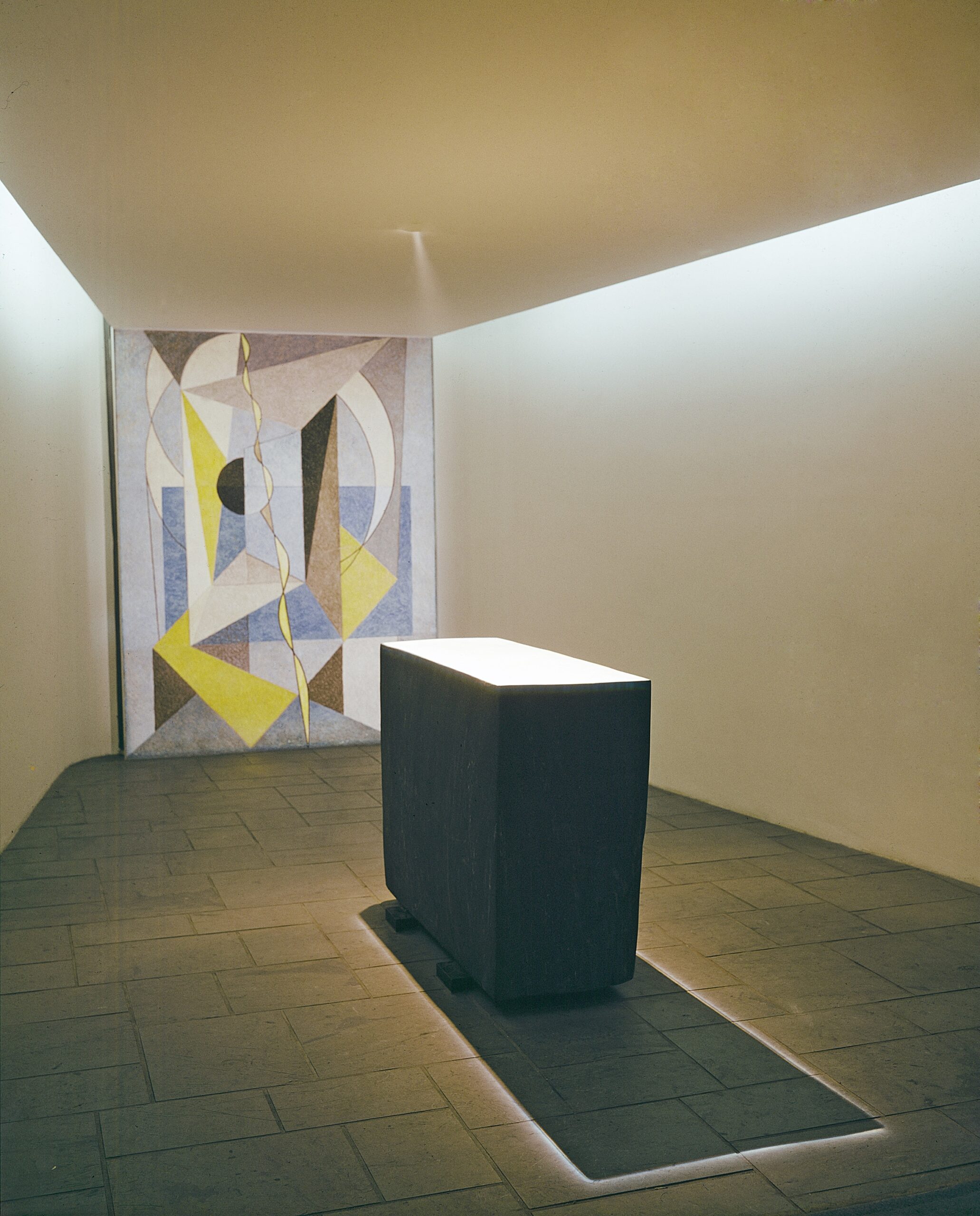
UN Meditation Room – A Room of Quiet
Usually open to the public Monday to Friday, the UN Meditation Room was designed, in its present form, by Dag Hammarskjold who took great interest in it. Information on the Room on the UN website includes a story by journalist Pauline Frederick: I remember very distinctly one night, when I heard that he had been working most of the night, and about two o’clock in the morning, he called some of his aides in, and they assumed that there had been some bad news from one of the fronts where the United Nations Emergency Forces were then located, but he but he said, “I want to go down to the Meditation Room.” More from the UN website.
Chagall’s Window of Peace at UN HQ, New York
UN Headquarters in New York contains a rich collection of art. One of the most stunning pieces is the stained glass window by Marc Chagall in the public lobby. Presented in memory of visionary Secretary General, Dag Hammarskjold, and of those who have lost their lives in service of peace, it stands right outside the Meditation Room. With its rich dream-like imagery of angels, animals, motherhood and ‘a young child being kissed by an angelic face’ the Chagall Window is a visual meditation in itself. Read more about the origins of the window and the story of its 2001 restoration.